Tankless vs. Tank Water Heater in Spring, TX
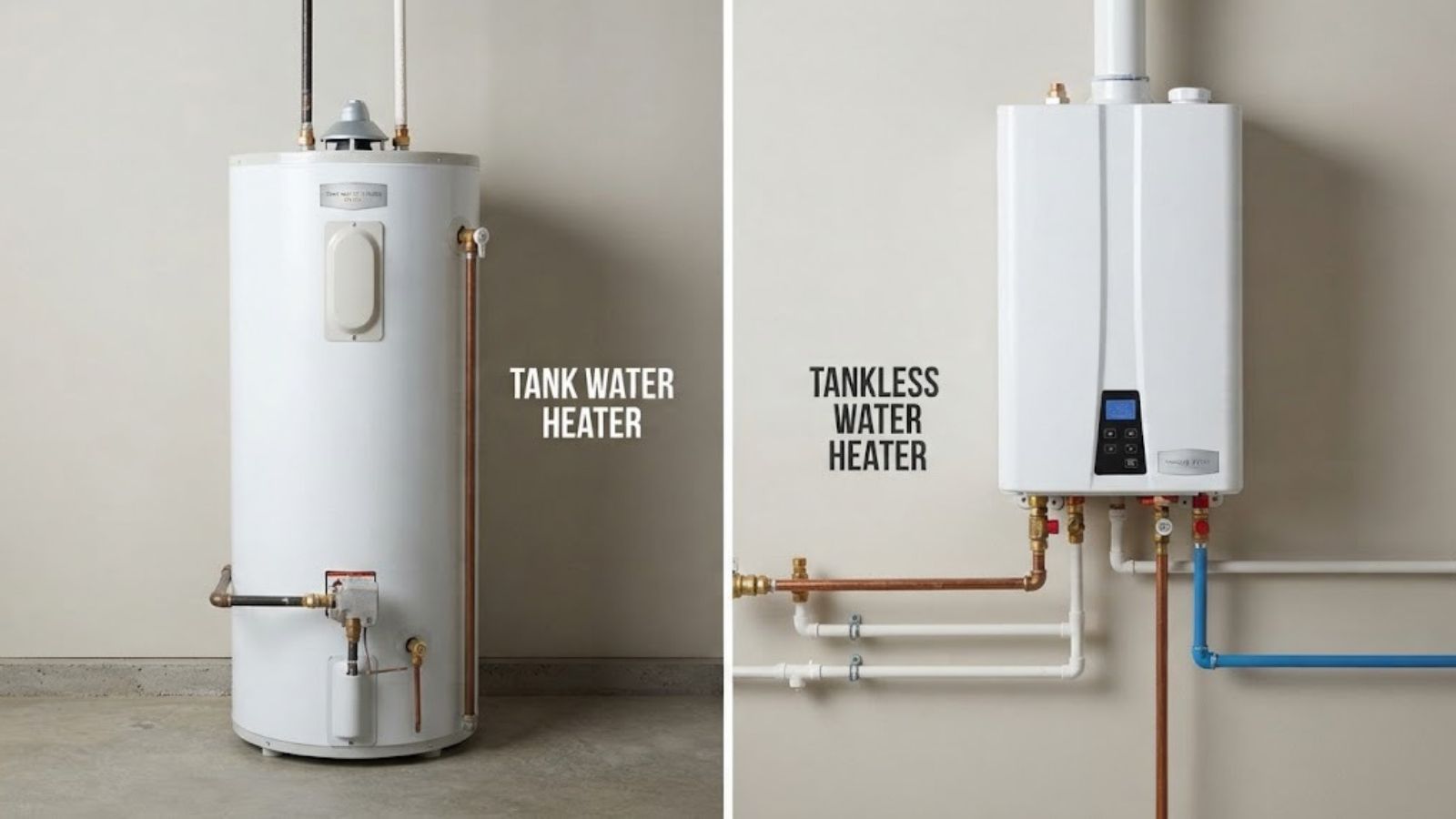
A tank water heater stores 30 to 80 gallons of hot water and keeps it heated around the clock. A tankless unit heats water on demand as it flows through, with no storage and no standby heat loss. For most Spring, Texas households, the real decision comes down to three things: how many people are running hot water at once, how long you plan to stay in the home, and how much you're willing to pay upfront. A system that typically lasts longer and runs more efficiently over its full service life often costs more to install.
The Real Differences That Matter
A tank system can run out of hot water when demand outpaces recovery, the classic scenario of someone getting a lukewarm shower because two other people showered first. A tankless unit doesn't store anything, so it doesn't run out, but it does need to be sized correctly for how many fixtures might run hot water at the same time.
Lifespan is a real, measurable difference. A standard tank typically lasts 10 to 12 years in this area, partly due to sediment buildup from the mineral content in North Harris County Regional Water Authority supply water. A well-maintained tankless unit often runs 15 to 20 years or more, which means over a typical homeownership span, a tankless installation may mean one replacement cycle instead of two.
Side-by-Side Comparison
Neither option is universally better. The table below covers the honest trade-offs.
| Factor | Tank | Tankless |
|---|---|---|
| Upfront cost | Lower | Higher |
| Typical lifespan | 10 to 12 years | 15 to 20+ years |
| Hot water supply | Limited by tank size | Continuous, if sized correctly |
| Space needed | A full closet or garage corner | Wall-mounted, minimal footprint |
| Maintenance | Occasional sediment flush | Annual descale recommended |
What Actually Drives the Decision
Household size and simultaneous usage matter more than almost anything else. A single person or couple rarely runs into a tank's limits. A larger household running showers, a dishwasher, and laundry at overlapping times is exactly the scenario tankless is built for.
How long you plan to stay in the home matters too. Tankless costs more upfront, and that cost pays off over a longer ownership period through efficiency and lifespan. If you're planning to sell within a couple of years, the calculation looks different than if you're settling in long term, and it's worth being honest with yourself about which situation actually applies.
Converting an Existing Tank to Tankless
A straight swap isn't always possible without additional work. Gas tankless units need correctly sized gas lines and proper venting, which an older tank setup may not have. Tankless water heater service covers new installs, annual descaling, and repair, including checking whether your existing gas line and venting can support a tankless unit before we recommend the conversion.
If your existing tank is simply failing and you're deciding between a straightforward replacement or switching systems entirely, water heater installation and replacement covers both paths with the same honest comparison laid out here.
What This Area's Water Means for Either Choice
North Harris County Regional Water Authority supply water, like most municipal water in the greater Houston area, carries enough mineral content to matter for either system over time. In a tank, that mineral content settles as sediment at the bottom, which is part of why tanks in this area often show reduced efficiency and a shorter effective lifespan than the same tank would see in a softer-water region.
A tankless unit doesn't accumulate sediment the same way, since there's no standing water to settle in. Mineral buildup does scale the heat exchanger itself over time though, which is exactly why an annual descale matters more here than it would in an area with naturally softer water. Homes that already run a water softener see less strain on either system, which is worth factoring in if you're installing new plumbing anyway.
Gas vs. Electric, for Either System
The tank-versus-tankless decision is separate from the gas-versus-electric decision, and both matter. Gas units of either type heat faster and typically cost less to run in this area given current utility pricing. They do need proper venting to the outside, which is a real consideration for a tankless retrofit in a home that's never had gas water heating before.
Electric units are simpler to install, since there's no venting requirement, but they generally cost more to operate over time. An electric tankless unit specifically needs enough electrical capacity to handle the sudden demand of heating water instantly, which isn't always available in an older home's panel without an upgrade. This is exactly the kind of detail worth confirming during an actual site visit rather than assuming either fuel type is a simple swap.
For a household already on gas for cooking or heating, staying with gas for the water heater usually makes the installation simpler, since the gas line infrastructure is already partly in place. A household on all-electric utilities faces a different set of trade-offs, and that's worth discussing honestly before committing to either fuel type.
Common Questions
Does a tankless water heater actually save money in Spring, TX?
Will a tankless unit run out of hot water with multiple showers at once?
How often does a tankless water heater need maintenance?
Is a tank water heater a bad choice?
Can I switch back to a tank if I install tankless and don't like it?
How long does a tankless water heater installation take?
Dealing with this in Spring or nearby right now?
☎ Call (281) 626-9205