What to Do If You Smell Gas in Your Home
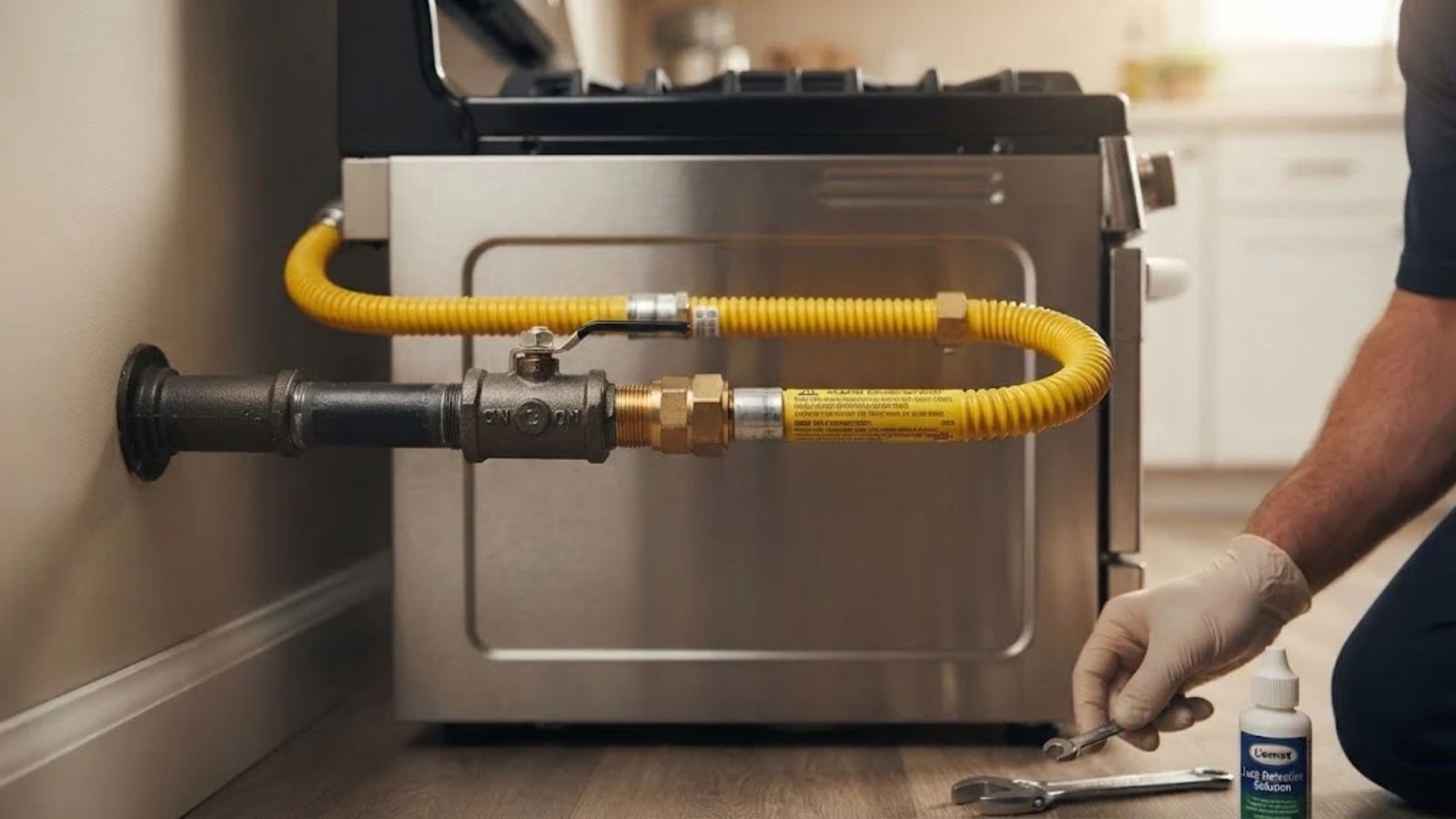
If you smell gas in your home, leave immediately without stopping to investigate the source. Don't flip light switches, don't use your phone until you're outside, and don't light anything. Once you're safely away from the house, call your gas utility's emergency line or 911 from outside. Only after the utility or emergency responders have confirmed it's safe should a plumber be brought in to find and repair the actual source.
Why the Order of Steps Matters
Natural gas is naturally odorless. According to federal pipeline safety regulations, utilities are required to add a chemical called mercaptan specifically so a leak is noticeable, and it's commonly described as smelling like rotten eggs or sulfur. That smell is a deliberate, regulated safety feature, not an incidental side effect, which is exactly why it should be treated as urgent every time, even if it seems faint or you're not fully sure.
The reason to leave before doing anything else, including flipping a light switch to see better, is that even a small electrical spark can ignite accumulated gas. That's not a remote or exaggerated risk, it's the actual mechanism behind gas explosions, which is why every real safety guide on this topic leads with the same instruction: leave first, investigate nothing.
What to Do, in Order
Get everyone out of the house immediately. Don't stop to gather belongings or investigate the smell's source.
Don't operate any switches, phones, or anything electrical while still inside, including a light switch by the door.
Once outside and at a safe distance, call your gas utility's emergency line or 911.
Stay away from the house until the utility or emergency responders confirm it's safe to return.
Other Signs Beyond the Smell
Not everyone can reliably smell mercaptan, and a leak underground or behind a wall can sometimes be filtered enough that the smell is faint or absent. A hissing or whistling sound near a gas line or appliance is worth watching for, along with dead or dying plants in an otherwise healthy area of the yard. Bubbles in standing water near an outdoor gas line, and a gas bill that's unexpectedly high without a usage change, are also both worth taking seriously even without a strong smell.
What Happens After the Leak Is Confirmed Safe
Once the utility has assessed the situation, they may shut off gas service to the home entirely until repairs are made and inspected, a process sometimes called pulling or red-tagging the meter. From there, gas line installation and repair covers locating the actual source of the leak, whether it's a fitting, a valve, or a line itself, and completing repairs that will pass the utility's follow-up inspection before service is restored.
This inspection requirement exists for a real reason: it confirms the actual problem was fixed correctly, not just that the smell went away. Skipping that step isn't an option the utility allows, and for good reason.
Reducing the Risk Before It Happens
Gas leaks most often originate at connection points, fittings, valves, and where a line connects to an appliance, rather than along a straight, undisturbed run of pipe. Appliances that get moved during a remodel or cleaning, and connections that haven't been checked in years, are worth having inspected periodically even without any current symptoms.
A carbon monoxide detector, while it doesn't detect natural gas leaks directly, is a genuinely worthwhile addition for any home with gas appliances, since it catches a separate but related risk: incomplete combustion from a malfunctioning gas appliance. The two aren't the same hazard, but a home equipped for one is usually a home that takes gas safety seriously across the board.
What Not to Do, Specifically
Avoid the instinct to open every window and turn on a fan to clear the smell before leaving, since operating an exhaust fan's electrical switch carries the same spark risk as any other switch. Don't try to locate the leak yourself by smell alone, moving room to room, since that delays getting everyone safely out.
Don't assume a smell that seems to fade on its own means the problem resolved. Gas concentration can fluctuate with airflow and temperature, and a leak that seems to have stopped is not the same as a leak that's actually been repaired. Treat any recurrence of the smell with the same urgency as the first time.
Don't re-enter the home to grab pets, valuables, or anything else once you've evacuated, until the utility or emergency responders confirm it's safe. This is the hardest instruction to follow in the moment, but re-entering a home with an active gas leak is exactly the scenario that turns a close call into a genuine tragedy.
Common Questions
Should I call a plumber first or the gas company first?
Is it safe to open windows on my way out?
What if I only smell gas faintly and I'm not sure?
Can a gas leak happen without any smell at all?
How often should gas lines and appliances be inspected?
What's the difference between a gas leak and a pilot light that's simply out?
Can weather affect how noticeable a gas leak smell is?
Dealing with this in Spring or nearby right now?
☎ Call (281) 626-9205