Signs of Hard Water (And What to Do About It)
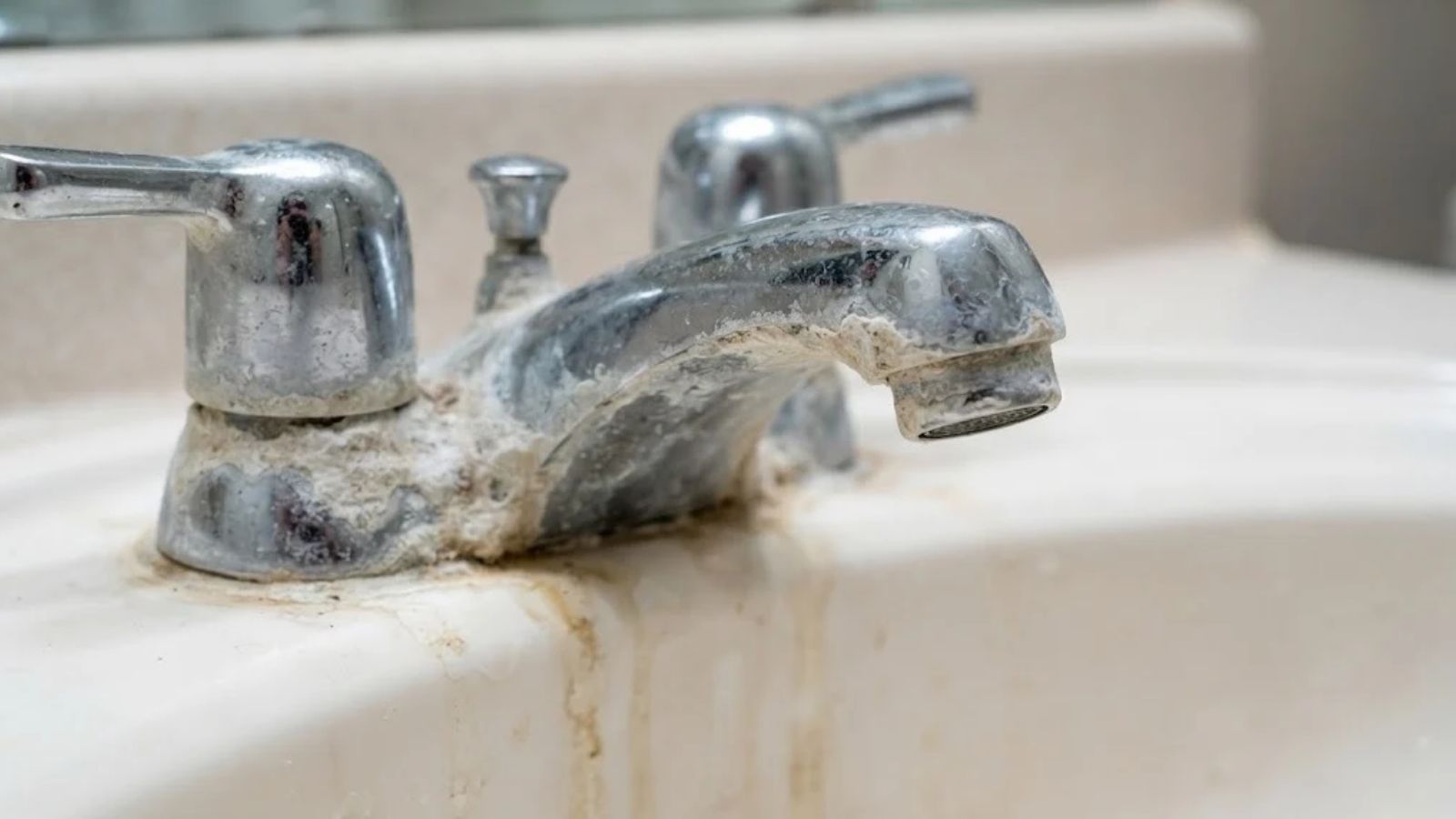
Hard water shows up as white, chalky buildup on faucets and showerheads, soap that won't lather well, spotty dishes even after washing, and dry skin or dull hair after a shower. It's caused by high mineral content, mainly calcium and magnesium, in the water supply. It's not a health hazard, but it does affect plumbing, appliances, and daily comfort in ways that add up over time.
The Visible and Not-So-Visible Signs
Mineral deposits on fixtures are usually the first thing people notice, a white or chalky residue that builds up around faucet spouts and showerheads. That same buildup happens inside pipes and appliances too, just out of sight, which is why hard water's real cost is often bigger than the cosmetic issue on the surface.
| Sign | Where You'll Notice It |
|---|---|
| White, chalky residue | Faucets, showerheads, bathroom fixtures |
| Soap won't lather, leaves film | Showers, sinks, dishwashing |
| Spotty or cloudy dishes | Straight out of the dishwasher |
| Dry skin, dull or stiff hair | After a shower or bath |
| Stiff, faded laundry | Clothes and towels over repeated washes |
| Reduced water pressure over time | Showerheads and faucets throughout the house |
Why This Is Common in the Spring, TX Area
Municipal water in this part of the Houston metro, drawn largely from groundwater sources, generally runs on the harder end for Texas, which is itself a state with above-average water hardness overall. This isn't unique to any one neighborhood here, it's a broader characteristic of the water supply feeding Spring and the surrounding cities.
What Hard Water Costs Beyond the Annoyance
Inside a water heater, mineral buildup insulates the heating element from the water itself, making the unit work harder and less efficiently while shortening its practical lifespan. Inside pipes, the same scale gradually narrows the interior diameter, which is a real, gradual contributor to declining water pressure throughout a home over years of accumulation.
Appliances that use water, dishwashers, washing machines, ice makers, all face the same accelerated wear from mineral buildup, often failing sooner than they would in a softer-water area.
What a Water Softener Actually Fixes
Water softener installation addresses the mineral content directly, exchanging calcium and magnesium for sodium ions before water reaches your fixtures and appliances. This doesn't just make showers feel better, it protects your water heater, pipes, and appliances from the accelerated wear hard water causes.
For households also concerned about taste or specific contaminants rather than just hardness, water filtration installation addresses a different, complementary part of water quality, and the two are often installed together for a complete solution.
Softener Sizing and Maintenance
A water softener sized correctly for your household's actual water usage and the specific hardness level of your supply performs far better than a generic, one-size unit. Undersizing means the system falls behind during peak usage, while an oversized system wastes salt and water on regeneration cycles more often than necessary.
Regular maintenance, mainly keeping the salt tank filled and occasionally checking the resin bed's condition, keeps a softener performing at its rated capacity for its full expected lifespan. A system that's run dry of salt for an extended period stops softening water effectively even though it may appear to still be running normally.
What to Expect After Installation
Most households notice a real difference within the first few days: less soap needed to lather, a smoother feel to skin and hair after showering, and glassware coming out of the dishwasher genuinely clear rather than spotted. These aren't subtle changes for a household that's dealt with hard water for years.
It's also common to notice a slight change in how water tastes, some people describe softened water as having a faintly different taste, though this settles for most households within a short adjustment period. Existing buildup on fixtures won't disappear overnight either, though it stops accumulating further and existing deposits become easier to clean off over time.
Softened Water and Your Garden or Lawn
Some homeowners wonder whether softened water is safe for outdoor plants, since it does add a small amount of sodium in exchange for the calcium and magnesium removed. For most established lawns and garden beds, this isn't a significant concern given the relatively low concentration involved, but it's worth keeping in mind for particularly sodium-sensitive plants.
A common practical solution is running a separate, unsoftened line to an outdoor spigot specifically for irrigation or garden use, which sidesteps the question entirely while still softening the water used inside the home for showers, laundry, and dishes.
Common Questions
Is hard water safe to drink?
How do I know for sure if I have hard water, not just suspect it?
Does a water softener remove all the minerals from water?
How long does a water softener system typically last?
Will a water softener fix low water pressure caused by existing buildup?
Is installing a water softener a complicated project?
Does hard water affect the taste of drinking water noticeably?
Can hard water shorten the life of a dishwasher or washing machine?
Do renters have any options for dealing with hard water?
Dealing with this in Spring or nearby right now?
☎ Call (281) 626-9205