Signs of a Slab Leak in Spring, TX Homes
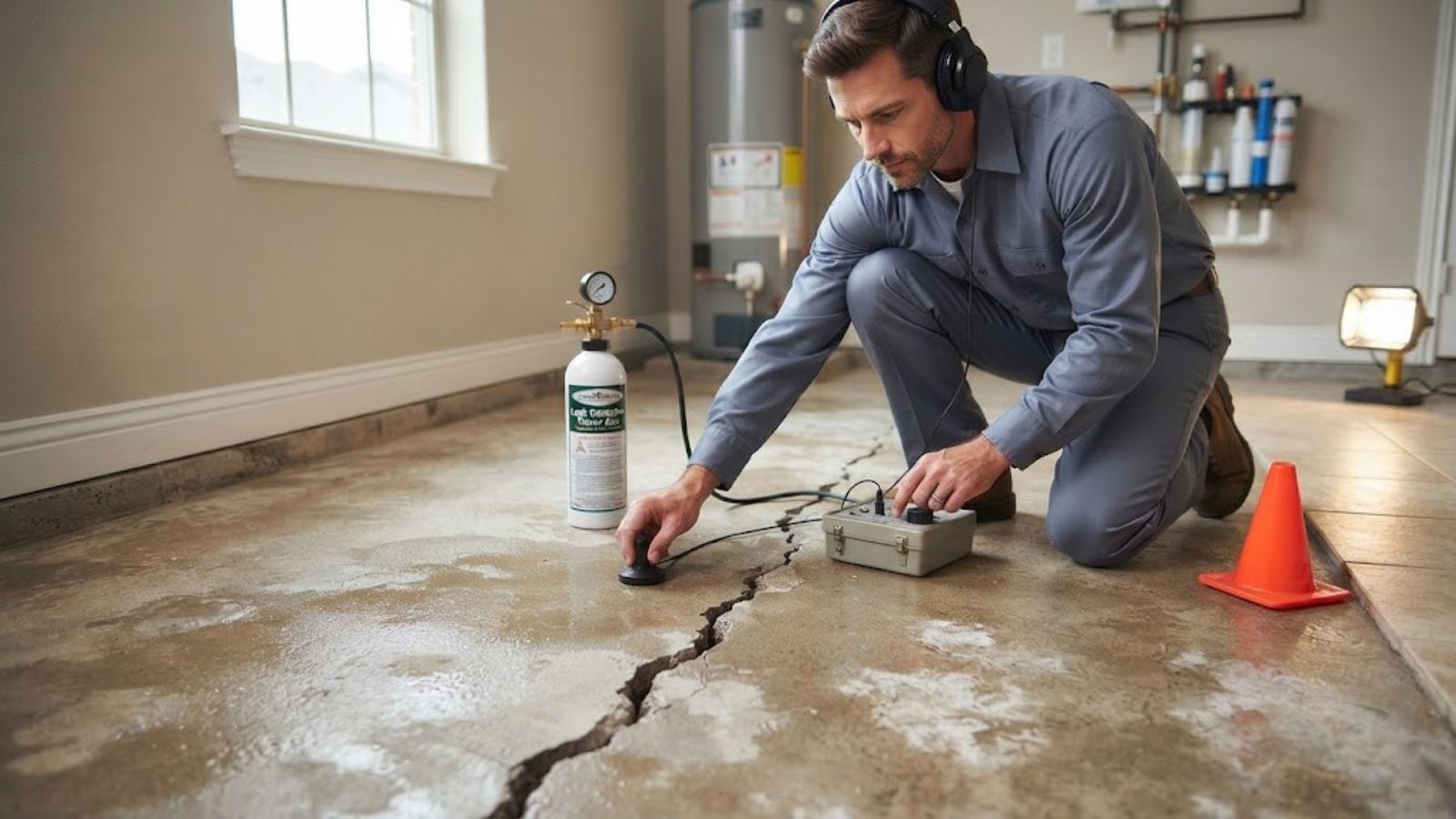
A slab leak is a leak in a water line running under your home's concrete foundation, and because it's hidden, most homeowners only notice it through secondary signs rather than the leak itself. In Spring, Texas, expansive Gulf Coast clay soil puts real stress on foundation plumbing. The most common early signs are a water bill that jumps for no clear reason, a warm or damp patch on the floor, and a hissing sound when no fixtures are running. Catching any of these early is what keeps a slab leak from turning into a larger foundation problem down the road.
Why Spring Homes Are Prone to This
Spring sits on the same expansive clay soil found across the Gulf Coast region. That soil swells when it absorbs moisture and shrinks hard during dry stretches, and the constant movement stresses the copper and cast iron supply lines running underneath an older slab foundation. Homes built before the mid-1990s, when copper was the standard supply material, see this most often.
The movement itself doesn't have to be dramatic to cause damage. A slab shifting by a fraction of an inch over years is enough to wear through a pipe at a joint or a point of contact with the concrete or rebar inside it.
The Real Warning Signs
A water bill that increases with no change in household usage is one of the most reliable signs. If every fixture in the house is shut off and the water meter is still moving, water is going somewhere, and a slab leak is one of the most common reasons.
| Sign | What It Usually Means |
|---|---|
| Water bill up with no usage change | Water is escaping somewhere, often under the slab |
| Warm or damp spot on the floor | A hot water line leaking beneath that section of slab |
| Hissing sound with fixtures off | Water moving through a line under pressure, likely a leak |
| Low water pressure | Water diverting through the leak instead of reaching fixtures normally |
| Mold or musty smell near the floor | Moisture building up under flooring or in wall cavities |
What to Do If You Notice These Signs
Start with the meter test. Shut off every fixture in the house, then watch the water meter for a few minutes. If it's still moving, there's a leak somewhere in the system, though not necessarily under the slab specifically.
From there, leak detection using acoustic and electronic equipment pinpoints the exact source without guesswork. If the leak turns out to be under the slab specifically, that moves into slab leak detection and repair, which covers the real decision between rerouting the line, a spot repair, or a broader repipe conversation if the pipe material is failing in more than one place.
Don't Wait on a Suspected Slab Leak
A slab leak that runs undetected for weeks or months does more than waste water. The moisture can undermine soil support under the foundation itself, turning what would have been a plumbing repair into a foundation problem. If you're seeing any of the signs above, especially a water bill that's climbed with no explanation, it's worth a real assessment rather than waiting to see if it gets worse.
How a Real Assessment Works
A proper slab leak assessment starts with the same meter test described above, confirming water is actually escaping somewhere in the system before anything else. From there, acoustic listening equipment traces the sound of water moving under pressure through the slab, and in some cases electronic line tracing pinpoints the exact location without cutting into the floor to search.
This matters because slab leak repair options genuinely differ based on where the leak sits and how the original plumbing was routed. A leak near an exterior wall is sometimes reachable by tunneling from outside, avoiding the interior floor entirely. A leak in the middle of a large slab, or one on a line that's already showing wear in more than one spot, more often points toward rerouting the line overhead through the attic instead of chasing the original path. Neither option is inherently better, they solve different situations, and a real assessment is what tells you which one actually fits your house rather than guessing.
The assessment itself typically takes less time than most homeowners expect, often well under an hour once the technician is on site, since the acoustic equipment narrows the search area quickly rather than requiring a slow room-by-room process.
What Homes in This Area Are Most at Risk
Age and pipe material matter more than almost anything else. Homes built before the mid-1990s across Spring, Tomball, and Humble often still have original copper supply lines running under the slab, and copper does eventually corrode from the inside, especially where the local water's mineral content is on the harder side. Homes with cast iron drain lines under the slab face a related but different risk, since cast iron corrodes and can develop cracks over a multi-decade lifespan regardless of soil movement.
None of this means an older home is guaranteed to develop a slab leak, plenty never do. It does mean that if you own a home in this age range and you notice any of the warning signs above, it's worth taking seriously rather than assuming it's nothing. The pipe material and the decades of soil movement are working against you in a way they simply aren't in a newer PEX-plumbed home.
Common Questions
Can a slab leak fix itself or go away on its own?
How much water can a slab leak waste before it's noticed?
Is a slab leak covered by homeowners insurance?
Do all slab leaks require breaking concrete to fix?
Dealing with this in Spring or nearby right now?
☎ Call (281) 626-9205