Is a Running Toilet an Emergency? What to Do
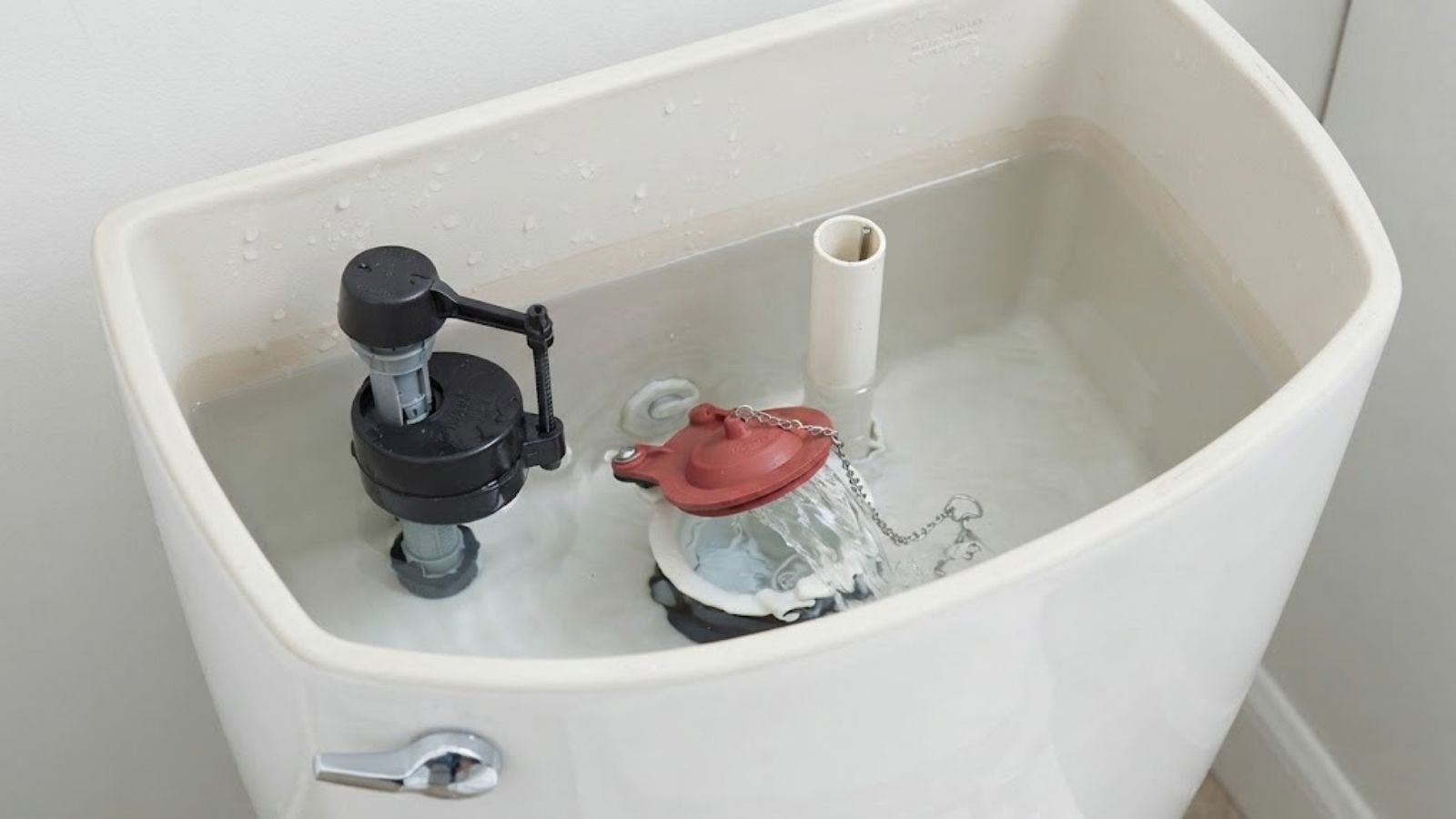
A running toilet is not a plumbing emergency in the sense of an active flood or an urgent safety risk, but it deserves prompt attention because of what it costs. A worn flapper can waste 200 gallons a day, and left alone for a full billing cycle, that adds up to a real, avoidable increase on your water bill. Most causes are a faulty flapper, a misadjusted float, or a fill valve that isn't shutting off completely, and many are fixable without a plumber.
Why a Toilet Runs Continuously
Every toilet tank uses the same basic cycle: press the handle, the flapper lifts, water rushes into the bowl, the flapper reseals, and the fill valve refills the tank until the float signals it's full. A running toilet means somewhere in that cycle isn't sealing or shutting off correctly.
The flapper, a rubber seal at the bottom of the tank, is the most common culprit. Rubber degrades over years of constant water contact, and once it warps or cracks, it stops sealing evenly, letting water trickle into the bowl continuously.
How to Tell What's Actually Wrong
Add a few drops of food coloring to the tank and wait 15 minutes without flushing. If color shows up in the bowl, the flapper isn't sealing. If the water level in the tank sits right at or above the overflow tube, the float is set too high or the fill valve isn't shutting off.
| Symptom | Likely Cause |
|---|---|
| Color test shows leak into bowl | Worn or misaligned flapper |
| Water level at or above overflow tube | Float set too high, or fill valve not shutting off |
| Handle feels loose or doesn't fully trigger flush | Chain too long or disconnected |
| Runs intermittently, not constantly | Slow flapper leak or a fill valve seating issue |
What You Can Try Yourself
A flapper is inexpensive and straightforward to replace: shut off the toilet's own supply valve, drain the tank, and swap the old flapper for a new one matched to your toilet's make. Adjusting the float, either the ball or clip depending on your fill valve type, to sit slightly lower often fixes an overfilling tank without any parts needed.
If neither fixes it, or the fill valve itself is worn out and won't shut off cleanly, that's when it's worth calling in toilet repair and installation rather than continuing to replace parts one at a time.
When It's Worth Calling a Plumber
If you've replaced the flapper and adjusted the float and the toilet still runs, there may be a cracked overflow tube, a valve that's failing internally, or an issue with the toilet itself rather than its parts. A toilet that runs intermittently in a way that's hard to diagnose, or one connected to a suspiciously high water bill that hasn't resolved with simple fixes, is also worth a professional look rather than continued guessing.
Older Toilets and Original Parts
Homes in this area built more than a decade or two ago sometimes still have original toilet hardware, parts that have simply never needed replacing until now. Original fill valves and flappers from that era don't always match current standard sizes exactly, which can make a hardware-store replacement not fit quite right even when it looks correct in the box.
This is a genuinely common source of frustration: a homeowner replaces a flapper, the toilet keeps running, and the actual issue turns out to be a mismatched fit rather than a defective part. Bringing the old part along when shopping for a replacement, or having a plumber match it directly, avoids this trial and error entirely.
A Running Toilet in a Multi-Bathroom Home
If you have more than one bathroom, it's worth checking each toilet individually rather than assuming a running sound is coming from the one you can hear it from. Sound travels through shared walls and plumbing chases in ways that can make a running toilet in one bathroom seem like it's coming from a different one entirely, especially at night when the house is otherwise quiet.
This matters because fixing the wrong toilet, or assuming a sound has stopped when it's actually just paused, wastes both time and water. A quick check of every toilet's tank, not just the one you suspect, is worth the extra few minutes before concluding a repair actually worked.
It's also worth checking guest bathrooms and any toilet that isn't used daily. A running toilet in a rarely-used bathroom can go unnoticed for weeks or months simply because nobody's in the room to hear it. That's one of the more common sources of an unexplained high water bill in homes with more than one or two bathrooms.
Common Questions
How much can a running toilet actually cost me?
Can I keep using the toilet while it's running?
Is it normal for a toilet to run for a few seconds after flushing?
How long do toilet flappers usually last?
Will a running toilet eventually stop on its own?
Is a running toilet ever a sign of a bigger plumbing issue?
Does the type of water heater we have affect toilet running issues?
Dealing with this in Spring or nearby right now?
☎ Call (281) 626-9205