Hydro Jetting vs. Snaking: Which Do You Need?
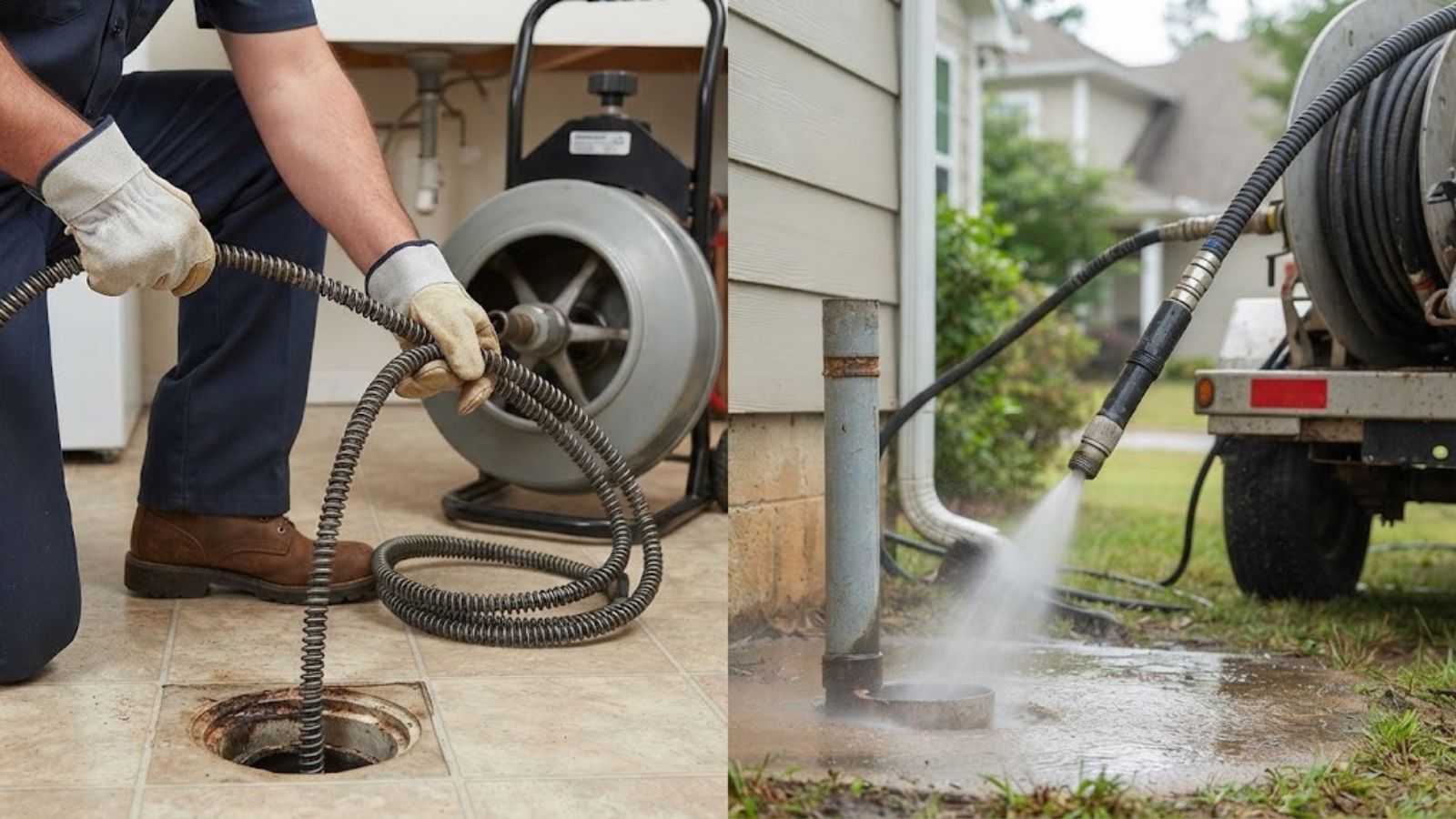
Snaking uses a flexible cable to physically break through and pull out a specific clog. Hydro jetting uses high-pressure water to clean the entire inside diameter of a pipe, removing not just the clog but the buildup along the walls that led to it. For a single, isolated clog, snaking is usually the faster, less expensive fix. For recurring clogs or significant buildup, hydro jetting addresses the underlying cause rather than just the immediate blockage.
How Each Method Actually Works
A drain snake, also called an auger, is a flexible metal cable fed into the pipe until it reaches the clog. Depending on the tool and the clog, it either breaks the blockage apart, hooks it and pulls it back out, or both. It's targeted and mechanical: it deals with what's directly in front of it.
A hydro jetter sends water through a specialized nozzle at very high pressure, scouring the entire interior surface of the pipe as it moves through, not just the spot where a clog happens to be sitting. That's the core difference: snaking removes an obstruction, hydro jetting cleans the pipe itself.
Comparing the Two Directly
Neither method is universally better, they solve different problems.
| Factor | Snaking | Hydro Jetting |
|---|---|---|
| Best for | A single, isolated clog | Recurring clogs, grease buildup, root intrusion |
| What it removes | The immediate obstruction | Buildup along the entire pipe wall |
| Typical cost | Lower | Higher |
| How long results last | Until the next clog forms | Longer, since underlying buildup is cleared |
| Pipe condition needed | Works in most pipe conditions | Requires pipe to be structurally sound |
When Snaking Is the Right Call
A single slow or clogged drain with no history of repeat problems is usually a good candidate for snaking. It's faster, less expensive, and gets water moving again without needing to address the whole line. Most single-fixture clogs, a clogged kitchen sink or a slow bathtub drain, fall into this category.
When Hydro Jetting Makes More Sense
A drain that clogs repeatedly despite being snaked each time usually has ongoing buildup along the pipe walls that snaking never actually addresses, since a snake clears a path through the clog rather than cleaning the surrounding surface. Grease buildup in a kitchen line, tree root intrusion in a sewer line, and pipes that haven't been cleaned in years are all better matched to hydro jetting than repeated snaking.
If a hydro jetting assessment reveals the pipe itself has significant damage rather than just buildup, that shifts the conversation toward sewer line repair or, for a less severe blockage that's still recurring, ongoing drain cleaning service instead.
What an Assessment Looks Like Before Either Method
A camera inspection before committing to either method is genuinely useful, especially for a recurring problem rather than a first-time clog. It shows whether the issue is truly buildup that jetting would clear, a specific obstruction snaking would remove, or structural damage that neither method addresses on its own.
This step matters most for older pipes or a history of repeated clogs in the same location, since it prevents spending on the wrong solution for what's actually happening inside the line.
Combining Both Methods
These two approaches aren't always an either-or choice. On some jobs, a plumber snakes a line first to clear an immediate blockage and restore flow, then follows up with hydro jetting to clean the full pipe once water is moving again. This sequence gets a blocked drain functional again quickly while still addressing the underlying buildup that likely caused the clog in the first place.
Whether this combined approach makes sense for your situation depends on the severity of the blockage and what the initial assessment reveals. That's exactly the kind of judgment call worth discussing directly with whoever's doing the work rather than assuming one method or the other in advance.
Which Areas of the Home See Each Method Most
Kitchen sink drains, given how often grease and food residue accumulate there over time, are a common candidate for periodic hydro jetting even without an active clog, purely as preventive maintenance in households that cook frequently. Bathroom drains, more often dealing with hair and soap buildup than grease, tend to respond well to snaking for isolated clogs.
Main sewer lines sit in their own category entirely, given their length, depth, and the higher stakes of a full blockage. A camera inspection paired with the appropriate method, jetting for buildup, root-cutting attachments for intrusion, or repair for structural damage, is the standard, thorough approach for this specific part of the system.
Common Questions
Is hydro jetting safe for all pipes?
How often should hydro jetting be done as maintenance?
Can I rent a drain snake and do this myself?
Does hydro jetting work on a completely blocked pipe?
Is hydro jetting more expensive because it takes longer than snaking?
Can hydro jetting prevent future clogs, not just clear existing ones?
Will hydro jetting damage older pipes that are already somewhat fragile?
How soon after hydro jetting can I use the drains normally again?
Dealing with this in Spring or nearby right now?
☎ Call (281) 626-9205