How to Find and Shut Off Your Main Water Valve
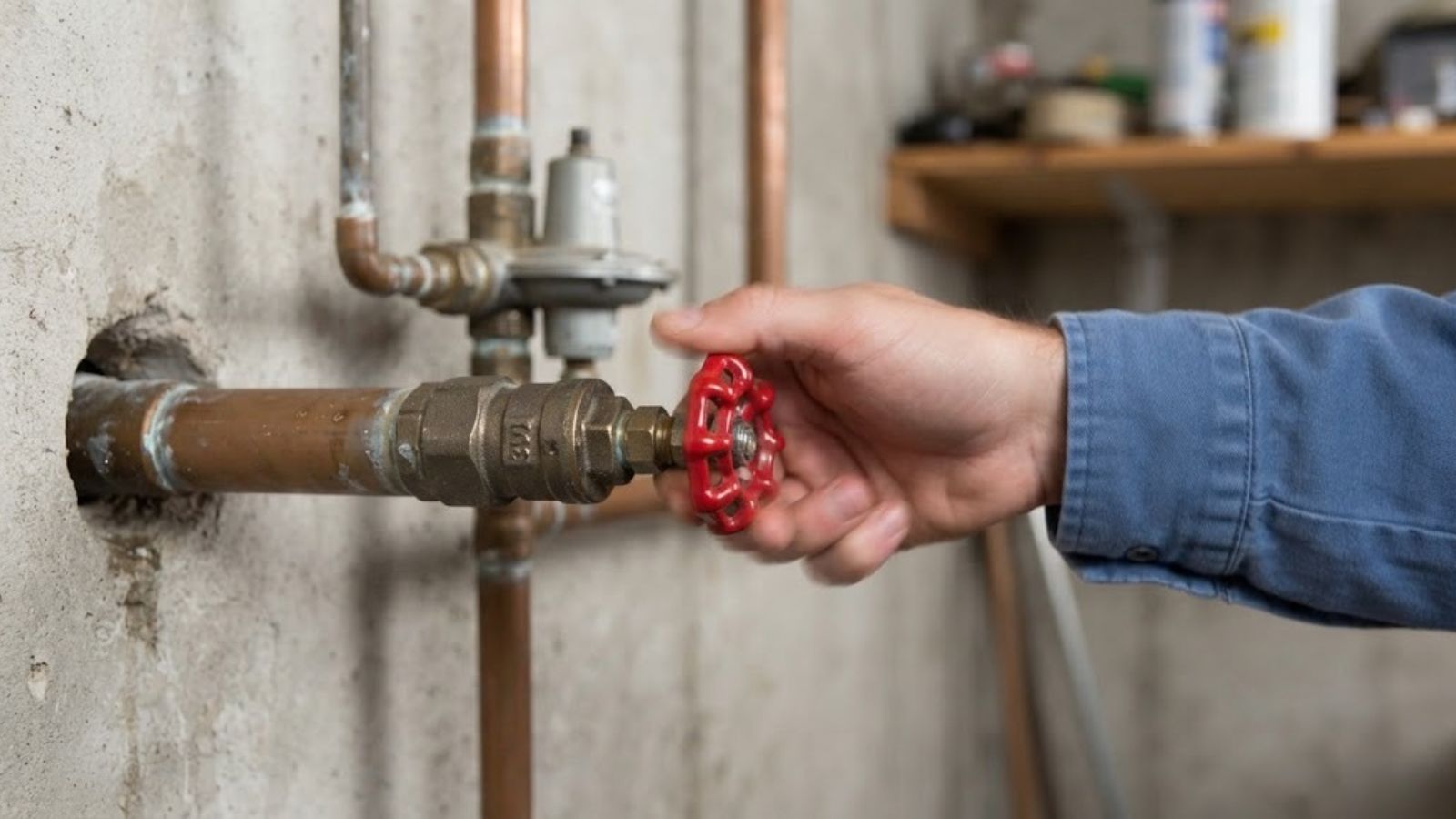
Your home's main water shutoff valve is usually located where the water line enters the house, either near the front-facing exterior wall, in a garage or utility closet, or in a ground box near the street. The International Plumbing Code (IPC) requires this valve to be installed in an accessible location for exactly this reason. To shut it off, turn a wheel-style valve clockwise until it stops, or turn a lever-style valve a quarter turn until it sits perpendicular to the pipe. Finding it now, before an emergency, is the single most useful five minutes you can spend on home plumbing prep, and it costs nothing but a little time.
Where to Look
Start inside. In many Spring-area homes, the main shutoff is in a garage, a utility closet, or along an interior wall that lines up with an exterior hose bib. Follow the largest pipe you can see toward where it enters the house.
If you can't find it inside, check outside near the front of the house, close to where the water line comes in from the street. In some homes, especially older ones, the only shutoff is in a ground box near the curb, which may need a meter key or a sturdy pair of pliers to access, and it's worth keeping that tool somewhere you'll actually remember during an emergency.
How to Turn It Off
A gate valve (wheel-style) turns clockwise until it stops. These can become stiff if they haven't been used in years, so don't be surprised if it takes real effort the first time. A ball valve (lever-style) only needs a quarter turn, from parallel with the pipe to perpendicular.
After shutting it off, confirm it worked by turning on a faucet inside the house. If water stops flowing, or slows to a trickle as remaining pressure clears, the valve is doing its job. It's worth doing this test once as a dry run, well before an actual emergency, so you already know both where the valve is and that it actually works when you need it to.
Why This Matters More Than It Seems
A burst pipe or a failed water heater can release a genuinely large amount of water in a short time. The damage difference between shutting off the main valve within a minute versus finding it twenty minutes later, while water is actively flooding a room, is significant, often the difference between a repair job and a full restoration project.
This matters even more during a hard freeze. If you suspect a frozen pipe that may have already cracked, shutting off the main valve before thawing it prevents a controlled thaw from turning into an uncontrolled flood.
Make Sure More Than One Person Knows
A shutoff valve only helps if someone can find it under pressure. Show every adult in the household where it is, and consider labeling it clearly. If a valve is stiff or won't turn at all, that's worth having checked before it becomes the thing standing between you and a contained emergency versus a flooded room, which falls under general burst pipe repair if it's already failed, or a straightforward valve replacement if it's just seized.
What to Do After You've Shut the Water Off
Shutting off the main valve stops new water from entering the system, but water already in the pipes between the valve and the leak will still drain out, sometimes for several minutes. Open the lowest fixture in the affected area, a basement sink or an outdoor spigot if you have one, to help that remaining water drain out faster rather than continuing to pool at the leak.
If the leak is significant, turning off electricity to any affected area is worth doing next, but only if you can reach the breaker panel without walking through standing water. From there, document the damage with photos before cleanup starts, since that record matters for any insurance claim, and call a plumber to assess both the repair itself and whether any secondary water damage needs separate attention.
Individual Fixture Shutoffs Matter Too
The main valve isn't the only shutoff worth knowing. Most toilets and sinks have their own small shutoff valve on the supply line underneath, usually a simple quarter-turn handle. For a localized issue, a running toilet or a leaking sink faucet, using the fixture's own shutoff means you don't have to cut water to the entire house while you sort out the actual repair.
These smaller valves can seize up from lack of use just like the main valve does, especially in a home where they've never been touched since installation. It's worth testing them occasionally, gently, rather than discovering they're frozen in place exactly when you need one to work, since a fixture shutoff that won't turn defeats the entire purpose of having it there in the first place.
The same logic applies to your water heater's dedicated shutoff, usually a valve right on the cold supply line feeding into the tank or unit. Knowing that one specifically matters if the water heater itself is the source of a leak, since it lets you stop that one appliance without shutting off water to the rest of the house.
Common Questions
What if my main shutoff valve won't turn at all?
Is there a difference between the main shutoff and my water meter?
Do I need a special tool to shut off my water?
Should I turn my main water off when I go on vacation?
Can shutting off the main valve too often damage it?
What's the difference between a gate valve and a ball valve?
Dealing with this in Spring or nearby right now?
☎ Call (281) 626-9205