How Long Does a Water Heater Actually Last?
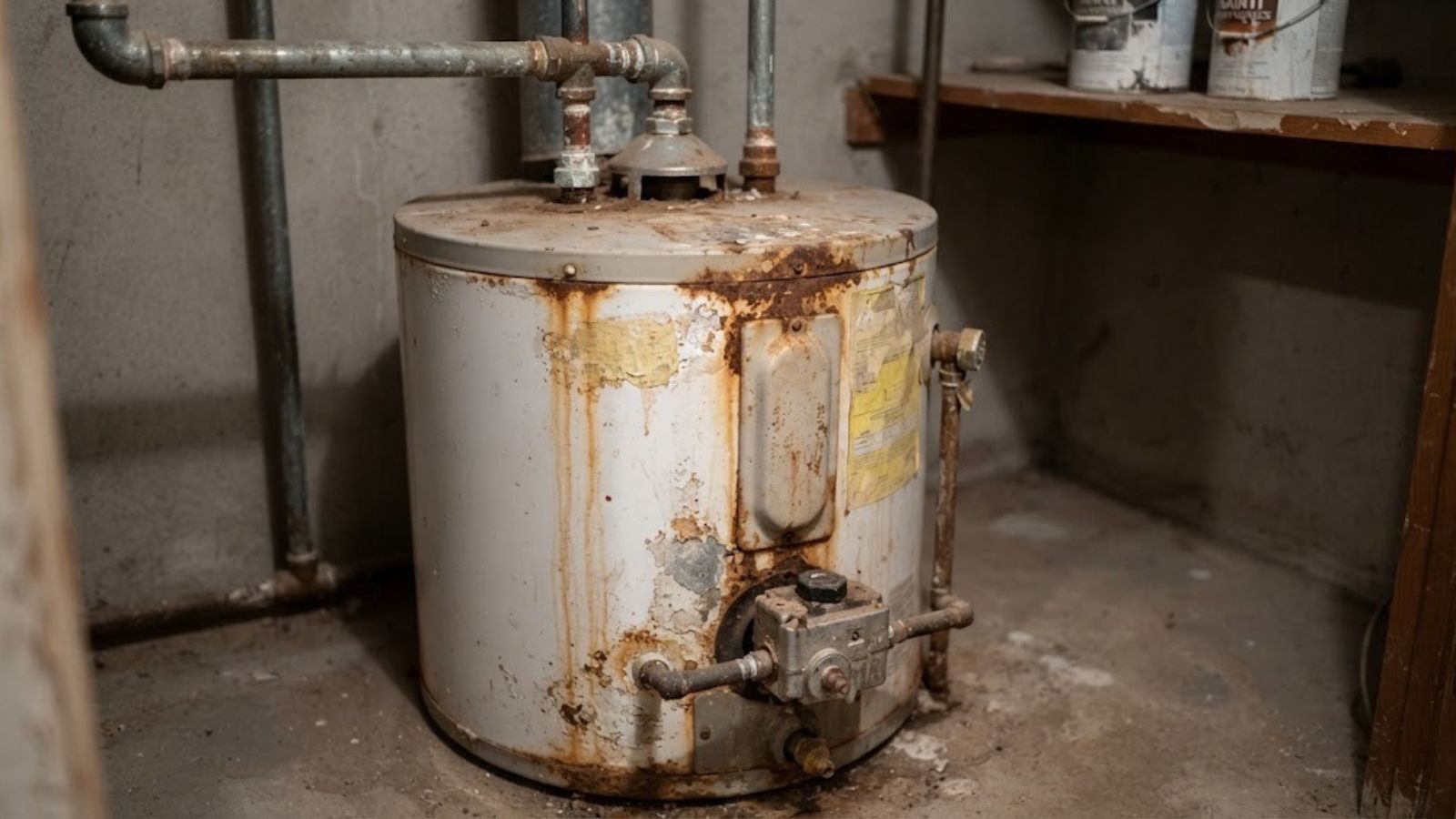
A standard tank water heater typically lasts 8 to 12 years. A tankless unit runs considerably longer, usually 15 to 20 years with proper maintenance. Age alone isn't the only factor though, water quality, maintenance history, and how the unit's been used all affect the real lifespan. The general rule once a tank passes the 10-year mark: if it needs a repair, replacement is usually the more sensible call rather than investing more into an aging unit.
Why Tank and Tankless Age So Differently
A tank water heater holds standing water against its metal lining around the clock. That constant contact is what eventually wears through the tank, usually starting as a slow leak once the internal anode rod, which is designed to corrode instead of the tank itself, has been fully consumed. Once that rod is gone, corrosion attacks the tank directly.
A tankless unit has no standing water and nothing to corrode from the inside the same way, which is the core reason it lasts so much longer. The tradeoff is that its internal heat exchanger scales up with mineral deposits over time, which is why annual descaling matters more for tankless than tank maintenance does.
Signs It's Time to Replace, Not Repair
Age combined with any of the following is usually the signal to stop repairing and start planning a replacement. Here's what to do once you spot one or more of these signs.
| Sign | What It Means |
|---|---|
| Rust-colored water or rust around the tank | Internal corrosion, tank is failing |
| Rumbling or popping sounds | Heavy sediment buildup, reducing efficiency and stressing the tank |
| Water heater is leaking at the base | Tank has physically failed, replace, don't repair |
| Inconsistent or insufficient hot water | Heating element or overall system degradation |
| Unit is 10+ years old and needs any repair | Repair cost rarely justified this close to end of life |
What Actually Extends the Lifespan
Annual maintenance is the single biggest factor within your control. Flushing a tank yearly removes sediment before it builds up enough to cause the rumbling and popping that signals real internal stress. Replacing the anode rod every few years, rather than letting it fully corrode away, keeps the tank itself protected for longer.
Water quality in this area also plays a real role. The mineral content in North Harris County Regional Water Authority supply water accelerates sediment buildup in a tank faster than it would in a softer-water region, which is part of why regular flushing matters more here than it might elsewhere.
Deciding Between Repair and Replacement
A unit under 6 years old with a single, contained issue, a faulty thermostat or heating element, is usually worth repairing. A unit past 10 years old showing any of the signs above is usually not, since the cost of a repair plus the likelihood of another failure soon after rarely makes financial sense. Water heater repair and water heater installation and replacement both start with an honest look at your specific unit's age and condition before recommending either path.
Gas vs. Electric Lifespan Differences
Gas and electric tank water heaters generally land in a similar overall lifespan range, but they tend to fail in somewhat different ways. Gas units have more mechanical parts involved in the pilot and burner assembly, which can develop their own issues over time separate from the tank itself. Electric units have fewer moving parts but rely on heating elements that can burn out independently of the tank's overall condition.
Neither type is clearly superior for longevity specifically, and the water quality and maintenance factors already covered tend to matter more than the fuel type alone. What does matter is that a gas unit failure sometimes involves a safety component, like a failing thermocouple, that an electric unit simply doesn't have to deal with.
Planning a Replacement on Your Own Timeline
The best time to replace a water heater is before it fails, not during a flooded utility closet at an inconvenient hour. Once a tank passes 8 years old, it's worth starting to think about replacement as a planned decision rather than an emergency reaction, which gives you room to actually compare tank versus tankless options rather than grabbing whatever's available same-day.
This is also the point where switching systems entirely, moving from tank to tankless, makes the most practical sense, since you're already planning for a new installation rather than trying to squeeze more life out of an aging unit under pressure.
A planned replacement also means you can schedule it for a convenient time rather than losing hot water unexpectedly on a random weekday. Some homeowners choose to replace proactively once a unit crosses 10 years specifically to avoid the unpredictability of exactly when an aging tank will actually fail.
Common Questions
How do I find out how old my water heater actually is?
Does a tankless water heater ever need full replacement?
Can I extend my water heater's life by flushing it myself?
Is it worth replacing a water heater before it fails completely?
Does the location of a water heater affect its lifespan?
Is a noisy water heater always close to failing?
Should I replace a water heater myself to save money?
Dealing with this in Spring or nearby right now?
☎ Call (281) 626-9205