High Water Bill But No Visible Leak? Real Causes
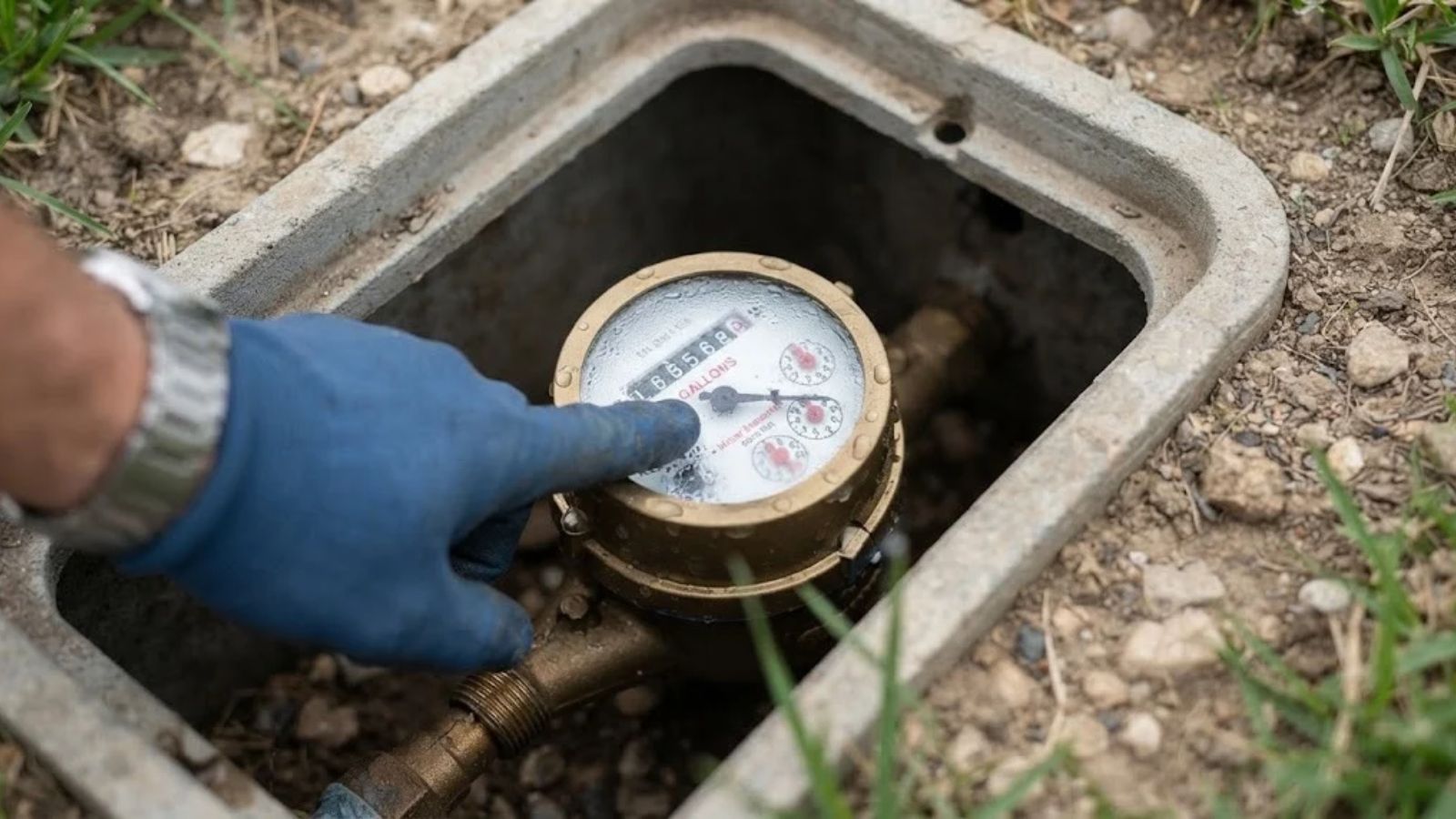
A high water bill with no visible leak almost always means the leak is somewhere you can't see, not that there isn't one. The most common causes, in order of how often we actually find them, are a running toilet, a slow leak under a slab foundation, a failing water heater, and a leak in the service line between the meter and the house. The fastest way to narrow it down is the meter test: shut off every fixture in the house, then watch whether the meter keeps moving, and give it a genuine 15 to 30 minutes rather than a quick glance.
Start With the Meter Test
Turn off every fixture and appliance that uses water. Find your water meter and note the reading, or watch the leak indicator dial if it has one. Wait 15 to 30 minutes without using any water, then check again. If the reading has changed, water is going somewhere in your system, and the size of the change can even give a rough sense of whether you're dealing with a small drip or something more significant.
The Most Common Real Causes
A running toilet is the single most common cause we find, and it's often silent. A worn flapper or a fill valve not shutting off completely can waste hundreds of gallons a day with no visible water anywhere.
| Cause | How to Check |
|---|---|
| Running toilet | Add food coloring to the tank, wait 15 minutes without flushing, check if color appears in the bowl |
| Slab leak | Meter still moves with everything off, sometimes paired with a warm floor spot |
| Water heater leak | Check around the base of the tank and any visible fittings for moisture |
| Irrigation system leak | Check zone valves and sprinkler heads for a zone that won't fully shut off |
| Service line leak | A wet or unusually green patch of yard between the meter and the house |
When It's Not a Leak at All
Sometimes a higher bill reflects real usage, not a leak. A new appliance, more people in the household, filling a pool, or a longer stretch of lawn watering during a dry spell can all show up as a genuine increase. It's worth ruling these out honestly before assuming something's broken.
Getting the Actual Source Found
If the meter test confirms water is moving with everything off, the next step is finding exactly where. Leak detection uses acoustic and electronic equipment to pinpoint the source, whether it's a fixture, a slab leak, or the service line, before any repair work starts.
If the leak turns out to be between the meter and the house rather than inside it, that's water line repair and replacement, a different line with its own repair approach. And if a running toilet turns out to be the culprit, toilet repair and installation usually resolves it in a single visit.
Reading Your Bill Before You Call
Most municipal water bills in this area show usage history for several past billing periods, which is worth checking before assuming something's wrong. A gradual climb over several months points toward something different than a single sharp spike. Seasonal irrigation increases or a slowly worsening toilet flapper tend to show up gradually, while a slab leak or a burst fitting typically shows up as a sudden jump within one or two billing cycles.
It's also worth checking whether the increase lines up with a specific event: a new appliance installed, guests staying for an extended period, or a change in lawn watering schedule. None of that requires a plumber, just an honest look at what actually changed. If nothing changed and the bill still jumped, that's the point where the meter test and a professional inspection genuinely earn their place.
When a High Bill Signals Something Bigger
Most causes on this list are minor, inexpensive fixes once found. But a persistently high bill that keeps climbing across multiple billing cycles despite fixing the obvious culprits, a toilet, a faucet, sometimes points toward a slower, ongoing issue like a slab leak that hasn't yet produced any visible sign beyond the bill itself.
In that situation, it's worth being direct with whoever does the inspection about the full history: how long the bill has been elevated, whether it's been climbing steadily or jumped suddenly, and what's already been ruled out. That history genuinely speeds up finding the actual cause instead of starting the investigation from scratch. It can be the difference between a same-day diagnosis and a longer process of elimination that costs more time and, in the case of an ongoing leak, more water.
Keeping a few months of past bills on hand, even just photos on your phone, makes this conversation much faster whenever it does come up, since it gives whoever's investigating a real baseline to compare against instead of relying on memory alone.
Common Questions
How much water can a running toilet actually waste?
My meter didn't move during the test. Why is my bill still high?
Can a leak be intermittent and only show up sometimes?
How fast can a slab leak affect my water bill?
Does a higher water bill always mean more water was actually used?
Is homeowners insurance likely to cover a high water bill caused by a leak?
Dealing with this in Spring or nearby right now?
☎ Call (281) 626-9205