Backflow Testing in Texas: What It Is, Do You Need It
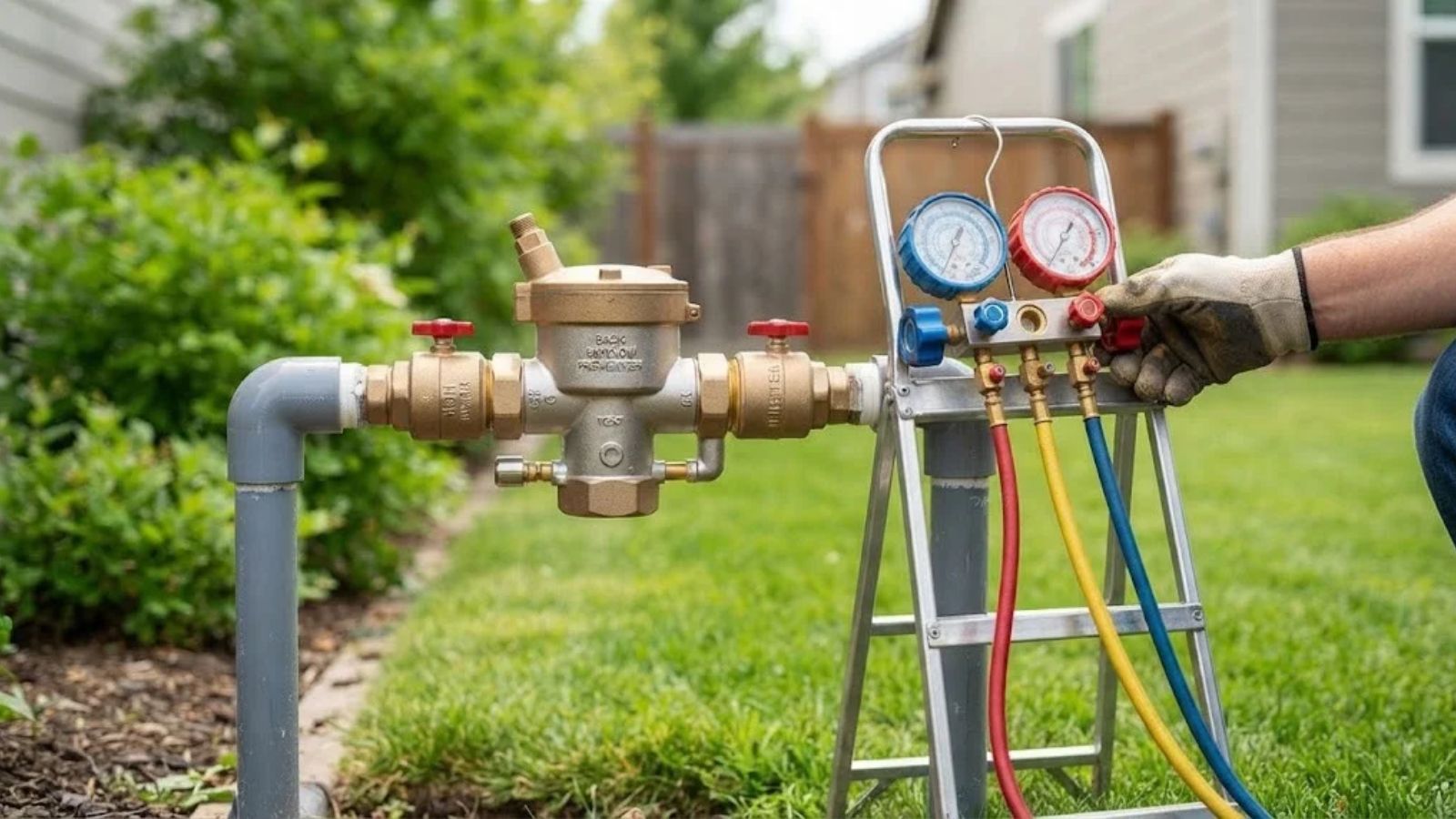
If your home has an in-ground irrigation system connected to municipal water, Texas requires annual backflow preventer testing under rules set by the Texas Commission on Environmental Quality. A backflow preventer is a mechanical device that stops water from flowing backward into your home's drinking water supply, protecting it from fertilizer, pesticides, or other contaminants that could otherwise be pulled back in during a pressure drop.
What Backflow Actually Means
Your irrigation system shares a water connection with the rest of your home's plumbing. Under normal conditions, water only flows one direction, out to your sprinklers. But during a pressure drop, nearby water main work, a large draw on the system during a fire, or a break in a street-level pipe, that flow can briefly reverse. That reversal can pull water back from wherever it was headed, including a sprinkler system sitting on treated lawn or soil.
A backflow preventer exists specifically to stop that reversal. It's a mechanical one-way barrier: water goes out normally, but it physically cannot flow back in the other direction even during a pressure event.
Who Actually Needs This
According to TCEQ requirements, any home or business with a cross-connection risk, most commonly an in-ground irrigation system, but also fire sprinkler systems or certain whole-house water treatment setups, needs an approved backflow prevention assembly and annual testing. If you don't have an irrigation system connected to municipal water, this requirement typically doesn't apply to you.
What the Annual Test Actually Involves
A licensed backflow tester connects test gauges to the device and checks whether it's holding differential pressure correctly, confirming the internal check valves are still sealing properly. The test itself typically takes 10 to 15 minutes and involves no digging or disruptive work to your yard or system.
After testing, the tester files a report with your water provider confirming a pass. If the device fails, repairs are required before the district will accept a passing report, and a failed device left unaddressed can eventually result in water service being affected until it's resolved.
Common Reasons a Test Fails
Worn internal check valves are the most common failure cause, the valves simply lose their seal over years of use, which is a normal wear pattern rather than a sign anything was installed incorrectly. Backflow testing and prevention covers both the required annual test and any repairs needed to bring a failed device back into compliance before your water provider's deadline.
Keeping Your Test Records in Order
Most water providers expect the annual test report filed directly by the licensed tester, but it's worth keeping your own copy as well. If a provider's records show a lapse, having your own documentation on hand resolves the question quickly rather than leaving you to prove compliance after the fact.
Setting a yearly reminder around the same time each year, rather than waiting for a notice from your provider, keeps this from becoming an easy thing to overlook. Many providers do send reminders, but treating the requirement as your own responsibility rather than relying entirely on that notice is the more reliable approach.
New Installations and Initial Testing
Every backflow prevention assembly, not just existing ones, must be tested at the time of installation before it's considered compliant, in addition to the ongoing annual requirement. This applies whether you're installing a new irrigation system for the first time or replacing an aging device that's failed repeated tests.
If you're planning a new irrigation system, factoring the backflow device and its initial test into the project from the start avoids a compliance gap between installation and your first scheduled annual test, which some water providers do check for specifically.
Beyond Irrigation: Other Common Applications
While in-ground irrigation is the most common reason a residential property needs a backflow preventer, it's not the only one. Fire sprinkler systems, boiler systems that connect to the potable water supply, and certain whole-house treatment equipment can all create the same kind of cross-connection risk that requires an approved device and testing.
Commercial properties face a broader range of these requirements too, given the wider variety of equipment and processes that might connect to a shared water supply, which is part of why commercial plumbing work often includes a more thorough backflow assessment than a typical residential visit.
Common Questions
Do I need backflow testing if I don't have an irrigation system?
What happens if I miss my annual backflow test?
Can I test my own backflow preventer to save money?
How much does backflow testing typically cost?
Does a new home already have a backflow preventer installed?
What's the difference between a double-check valve and a reduced pressure zone device?
Can I install a backflow preventer myself to avoid the installation cost?
Does testing require shutting off water to the whole house?
If I remove my irrigation system entirely, do I still need annual testing?
Dealing with this in Spring or nearby right now?
☎ Call (281) 626-9205